2025 Year in Review
Happy holidays! With 2025 wrapping up, we want to share some highlights from excellent organizing by the Green Corps team over the last 12 months. Thank you for making this work possible! There are no shortcuts to protecting the environment. That’s why Green Corps focuses on training organizers in the basic skills that have helped the environmental movement make steady progress for the last three decades - planning strategic campaigns, listening, storytelling, inspiring people to act for the very first time.
Going forward, you can also stay up to date with Green Corps through our updated website. Check out our Green Corps In Action page for more in depth stories from current organizers and our Green Corps Legacy page for snapshots of our inspiring alumni in 2026!
Spring
Pennsylvania Clean Energy: A team of organizers worked from Philadelphia, PA, with a team of Green Corps alumni, on a campaign to build support for clean energy across the commonwealth. They coordinated more than 20 media events at schools, breweries, farms, businesses, churches and nature centers across the state to demonstrate the success of rooftop solar, electric school buses, and more. They garnered dozens of media hits and have since had reports of churches, for example, seeing the news coverage and starting the process to install rooftop solar.
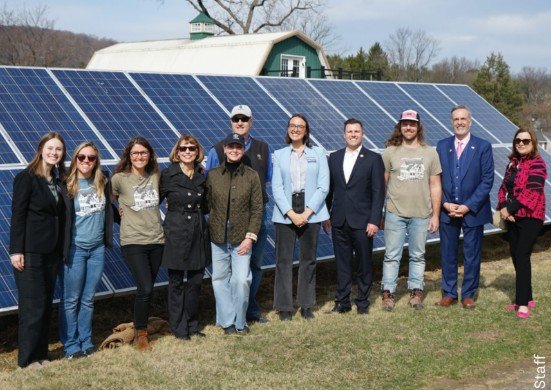
This is one of two dozen clean energy tours at breweries, schools, business and farms that are already benefitting from clean energy and electrification technologies.
Waste is Out of Fashion: Textile waste is a growing problem as many fashion brands fail to sell 30% of their products, and send them to landfills or incinerators. With the Student PIRGs, Green Corps organizers recruited volunteers to call on H&M to commit to not trashing or burning unsold clothing in the U.S. In North Carolina, Georgia, and Pennsylvania, organizers trained 200 volunteers to run petition drives and educational campaigns with clothing swaps and sustainable fashion shows to which they recruited more than 750 attendees to learn about this issue and take additional campaign actions.
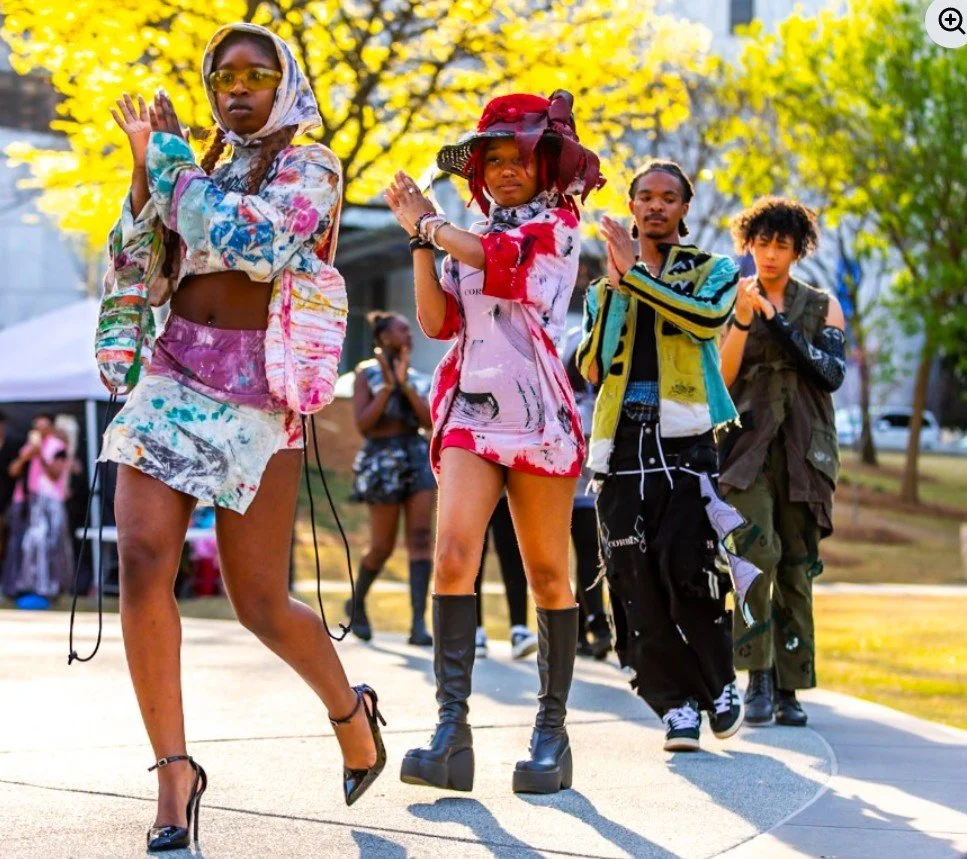
More than 200 people participated in the Sustainable Fashion show in Atlanta Georgia in March 2025.
Save Texas Renewables: Texas is leading the country in wind power and utility-scale solar. Unfortunately, if Senate Bill 819 passes during the 2025 Texas legislative session, renewable energy development could grind to a halt. Our organizers launched Environment Texas’ grassroots efforts in Dallas and Houston where they recruited volunteer teams that submitted dozens of letters to the editor, collected more than 2,000 petition signatures, and placed 400 calls and tagged social media posts to state legislators. They hosted a webinar to correct misconceptions about clean energy projects and other media events and recruited volunteers to testify at the bill’s first hearing in Austin. The bill in question died in committee.
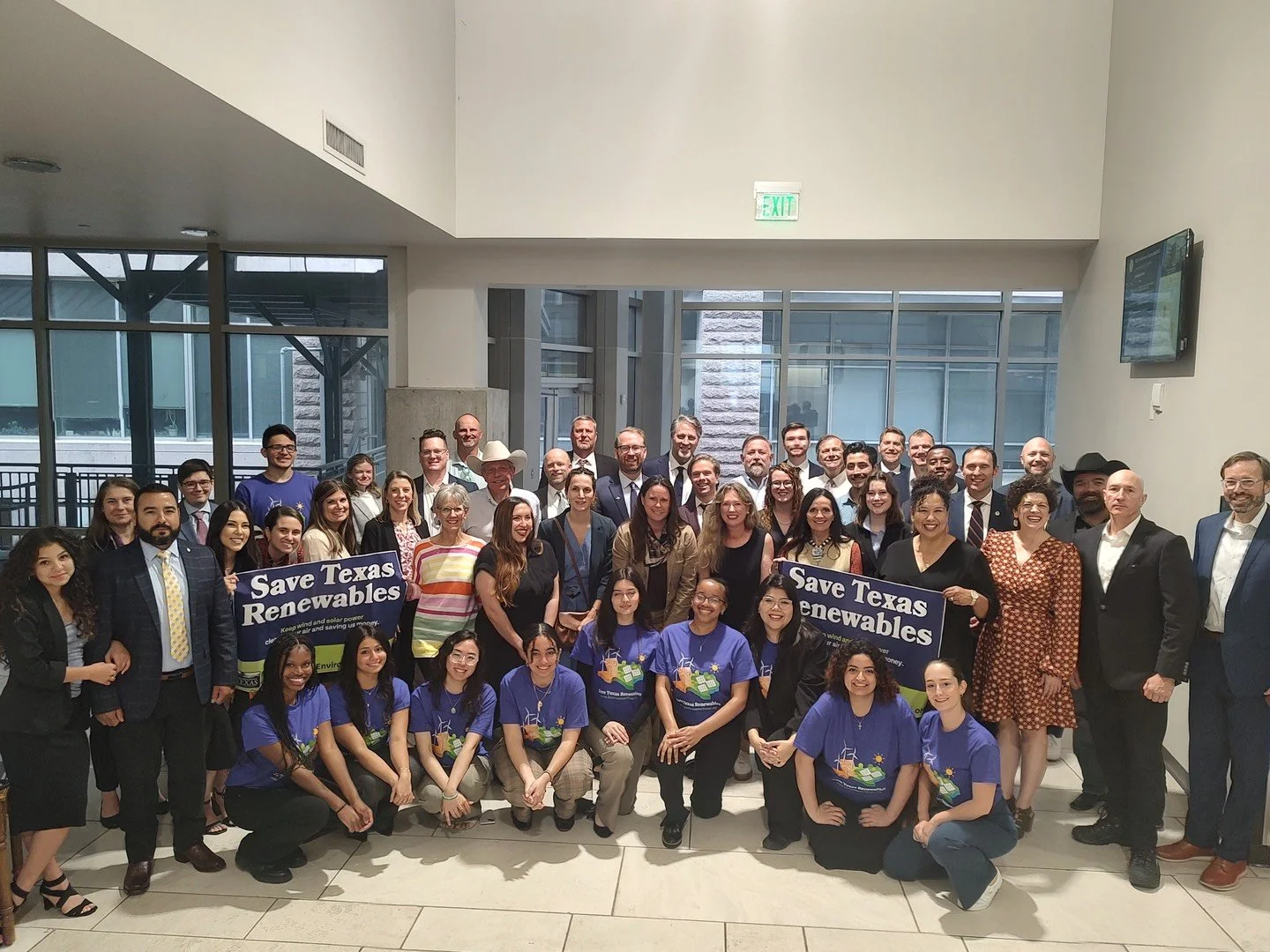
At the end of March, the Save Texas Renewables Coalition recruited ranchers, conservationists, scientists and community members to testify at hearings in Austin about the bills that could grind wind and solar energy development to a hault.
Summer
The Class of 2025 directed citizen outreach offices with the Fund for the Public Interest, recruiting and training staff to educate thousands of Americans about environmental problems and solutions. These efforts raised hundreds of thousands of dollars for campaigns including tackling microplastic pollution in waterways in the Chesapeake Bay Region and reinvesting in the Wisconsin state park system.
Fall
Protect the Arctic: On behalf of the Arctic Defense Campaign, five Green Corps organizers educated the public about the ecological and cultural importance of the Arctic National Wildlife Refuge and the current efforts to open it up for oil and gas development. The team collected more than 6,000 petition signatures, drove in 777 calls to Congress, and generated 26 different media hits. The coordinated educational events with community organizations including local Audubon chapters, bird alliances and wildlife artists.
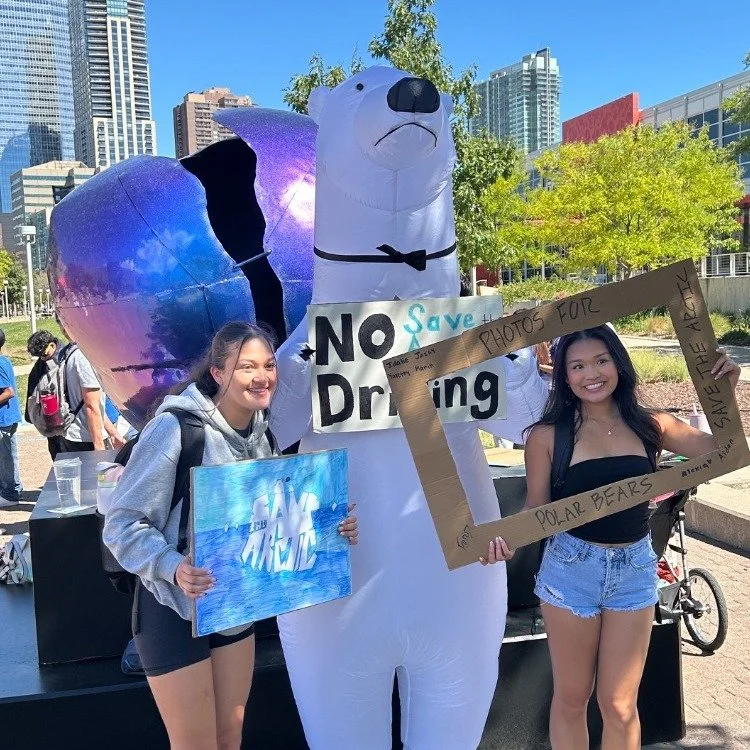
Organizers coordinated social media days of action, “Arctic Bird Walks,” documentary screenings, educational panels, “Arctic Art & Advocacy Showcases,” press conferences and more to educate more Americans about the value of protecting the Arctic National Wildlife Refuge.
Break Free From Plastic: Our organizers also launched the Break Free From Plastics new effort to increase awareness of microplastic pollution and impacts for human health. This team coordinated microplastic “nurdle” hunts featured in the Dallas Morning News, plastic clean ups, and documentary screenings while educating more than 5,000 California and Texas residents about this issue. They partnered with groups ranging from Keep Dallas Beautiful to Surfrider to Turning Point. They also recruited 1,500 people to complete an in-depth “Plastic House Challenge” Survey for an in-depth analysis about microplastic exposure in Americans’ daily lives.
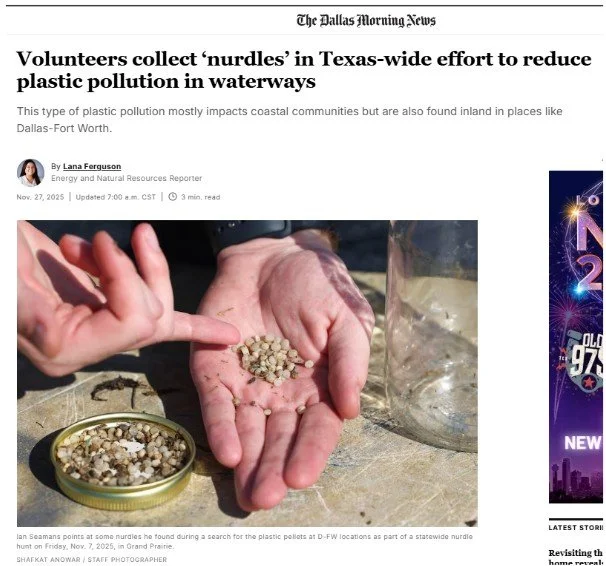
The Dallas volunteer team coordinated two plastic clean ups, a microplastic “nurdle” hunt, and earned media coverage on the front page of the Business Section of the Dallas Morning News.
Wildlife Crossings: Other organizers put their skills to the test with the Student PIRG’s campaigns for wildlife crossings in North Carolina and Florida. Campaign teams called on state governments to allocate more funding to construct wildlife crossings, which could help reduce vehicle-animal collisions and protect countless species including the endangered Florida panther and the Red wolf in North Carolina. Campaign teams collected more than 3,000 petition signatures, organized across 8 college campuses, and worked with dozens of community organizations to coordinate events educating thousands of community members and students. Their work was featured in the Tampa Bay Times and television stations in North Carolina.
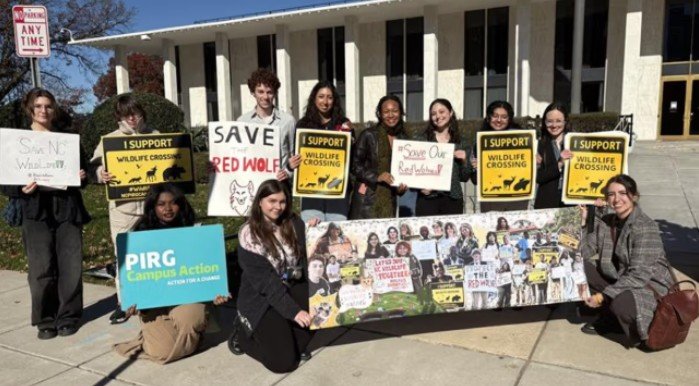
Volunteers from 5 universities in North Carolina traveled to Raleigh to educate legislators about the value of wildlife crossings.
Save the Bees: On behalf of MASSPIRG, organizers in Dartmouth, Salem, Lowell, and Amherst, Massachusetts called on Governor Maura Healey to restrict the use of seeds coated with bee-killing pesticides, neonicotinoids, in Massachusetts. Between the spring and the fall, nearly 9,000 students and small businesses took action by signing petitions, taking photos to send to the governor, writing letters, and more! Teams orchestrated additional events with beekeepers, toured apiaries, distributed “seed balls,” and coordinated a lobby day at the state capitol building.
Thank you
These highlights showcase just some of the impactful work Green Corps organizers and alumni accomplished in 2025. Looking ahead, we’re committed to training more organizers and equipping them with the skills to create even greater impact.
